


When to Call an Industrial Electrician
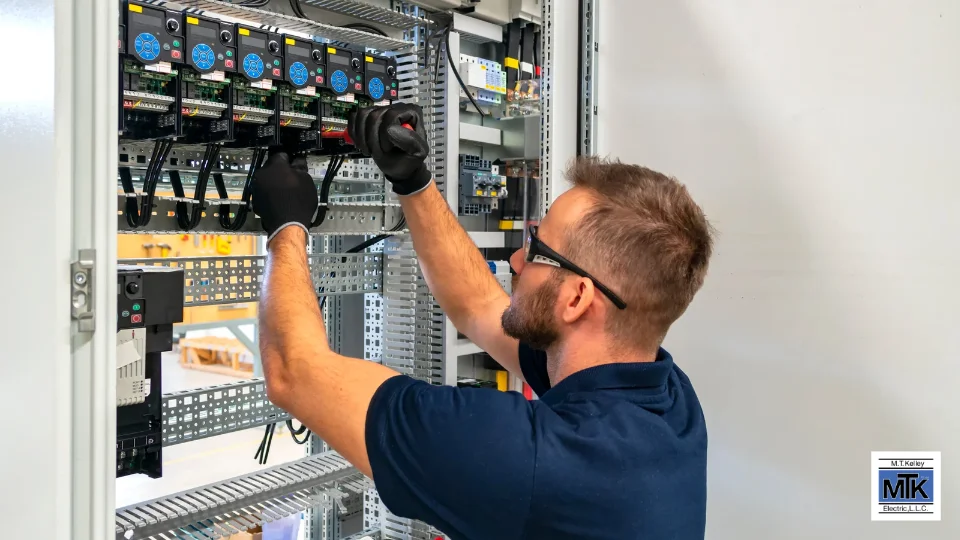
Industrial facilities depend on electrical systems that support machinery, controls, lighting, communications, ventilation, and production equipment. When those systems begin behaving unpredictably, a small electrical issue can quickly become a safety concern or production interruption.
An industrial electrician understands high-capacity distribution, motors, control systems, switchgear, and equipment connections. Calling an industrial electrician at the right time can help a facility identify the cause of a problem before it leads to extended downtime or damaged equipment.
Breakers Trip Repeatedly
A breaker may trip because of an overload, short circuit, ground fault, damaged conductor, or failing piece of equipment. Resetting it repeatedly without identifying the cause can expose the facility to additional risk.
Document which breaker trips, what equipment was operating, and when the problem occurred. This information can help an industrial electrician narrow the investigation.
The electrician may evaluate circuit loading, connections, insulation, protective devices, and connected equipment. A recurring trip should not be treated as a routine inconvenience.
Panels or Equipment Show Heat Damage
Electrical heat can appear as discoloration, melted insulation, damaged components, or an unusual odor near panels and machinery. Buzzing, crackling, or visible arcing can point to a loose connection or failing component.
These conditions require prompt attention. Keep unqualified employees away from exposed electrical parts and follow the facility’s emergency procedures.
The National Institute for Occupational Safety and Health states that only qualified people should perform work on electrical equipment and distribution systems. Qualified workers need appropriate training, procedures, tools, and protective equipment.
An industrial electrician can isolate the affected area, inspect the system, and determine which repairs are needed before equipment returns to service.
Machinery Starts or Stops Unexpectedly
Intermittent equipment behavior can have electrical, mechanical, or control-related causes. Motors may overheat, fail to start, draw abnormal current, or stop during production. Variable frequency drives and control circuits may also display faults.
An industrial electrician can evaluate the power supply, motor connections, disconnects, starters, drives, relays, sensors, and control wiring. Testing helps distinguish an electrical problem from a mechanical or process issue.
Accurate diagnosis reduces unnecessary component replacement and helps maintenance teams focus on the source of the failure.
New Equipment Is Being Installed
Industrial machinery often requires dedicated circuits, disconnects, grounding, controls, and specific voltage or phase configurations. The existing electrical system may also need a capacity review before the equipment is connected.
An industrial electrician should be involved before machinery is delivered. Early coordination gives the project team time to review equipment data, installation requirements, utility needs, working clearances, and shutdown schedules.
M.T. Kelley provides commercial electrical construction services for new systems, facility expansions, power distribution, emergency equipment, and electrical upgrades.
Production Loads Have Increased
Adding machinery, process equipment, charging stations, or other large loads can change how the electrical system performs. Panels, feeders, transformers, and service equipment may no longer match current facility demand.
Signs of capacity concerns can include nuisance trips, voltage fluctuations, overheated components, or limited space for new circuits.
An industrial electrician can review current loads and planned growth before recommending a service upgrade, new distribution equipment, or another solution. This review should occur during project planning rather than after equipment arrives.
Switchgear or Panels Are Aging
Older electrical equipment may have worn components, outdated protective devices, limited capacity, or replacement parts that are difficult to source. Labels and circuit directories may also be incomplete after years of facility changes.
Aging equipment does not always require immediate replacement, but it should receive qualified evaluation. The condition, loading, maintenance history, and importance of the connected systems all influence the next step.
M.T. Kelley’s commercial electrical services include switchgear and panelboard installation, alterations, maintenance, repairs, lighting, generators, fire alarms, and low-voltage work.
Planned Shutdown Work Is Approaching
Many industrial electrical projects require equipment or sections of the facility to be de-energized. Coordinating this work during a planned shutdown can reduce disruption and give crews controlled access.
An industrial electrician can help define the scope, required materials, labor sequence, testing steps, and restoration plan. Communication with operations, maintenance, safety teams, and other trades is important throughout the shutdown.
The Occupational Safety and Health Administration’s lockout and tagout guidance addresses procedures for controlling hazardous energy during machine servicing and maintenance. Facility procedures should account for every relevant energy source and authorized worker.
Electrical Work Requires Safety or Code Review
Facilities change over time. Temporary equipment may become permanent, circuits may be added, and production layouts may shift. Those changes can create concerns related to loading, grounding, protection, access, or documentation.
An industrial electrician can inspect the affected systems and recommend corrections. Electrical review may also be appropriate before a renovation, equipment relocation, tenant change, or facility expansion.
Qualified electrical contractors can coordinate with engineers, inspectors, general contractors, and facility teams when a project includes complex distribution or code requirements.
An Electrical Failure Stops Production
A sudden outage may affect one machine, a production line, or an entire facility. Before calling for service, gather available details without opening electrical equipment or approaching exposed parts.
Note which areas lost power, which alarms appeared, and what happened immediately before the failure. Confirm that employees are away from smoke, heat, sparks, standing water, or damaged equipment.
An industrial electrician can troubleshoot the failure, identify the damaged components, and develop a repair plan. After service is restored, the facility may also benefit from a review of the underlying cause.
Schedule Industrial Electrical Service With M.T. Kelley
Facilities should call an industrial electrician when electrical problems repeat, equipment behaves unpredictably, panels show heat damage, production loads change, or planned work requires safe coordination.
M.T. Kelley Electric has served Chicagoland businesses since 1994. Our union electricians support factories, manufacturing plants, data centers, commercial properties, and other demanding facilities.
Contact M.T. Kelley Electric to discuss an industrial electrical repair, upgrade, equipment installation, or planned shutdown.
Frequently Asked Questions
What problems require an industrial electrician?
Call an industrial electrician for repeated breaker trips, hot panels, burning odors, machinery faults, voltage problems, damaged wiring, switchgear concerns, electrical upgrades, and production outages.
Can maintenance staff keep resetting a tripped breaker?
A breaker that trips repeatedly should be evaluated instead of continually reset. The trip may indicate an overload, short circuit, ground fault, or equipment problem that requires qualified testing.
When should an electrician become involved in new machinery installation?
Electrical coordination should begin before the equipment arrives. Early involvement allows time to review voltage, phase, load, circuit, disconnect, grounding, control, and shutdown requirements.
Can industrial electrical work be scheduled during a shutdown?
Yes. Planned shutdowns are often useful for upgrades, maintenance, testing, and repairs that require equipment to be de-energized. The scope and restoration plan should be coordinated in advance.
- About the Author
- Latest Posts

Vincent is the current leader of M. T. Kelley Electric, succeeding his father Thomas Kelley in 2014. Vince graduated Summa Cum Laude with a Bachelor of Science in Finance from Northern Illinois University. He followed in this fathers’ footsteps joining IBEW Local 134 in 2005, and has been a part of the family business ever since.